Bespoke Bath. White To Fluorescent.

3
CherryBath

Custom Bath.

White To Fluorescent Bath Service.

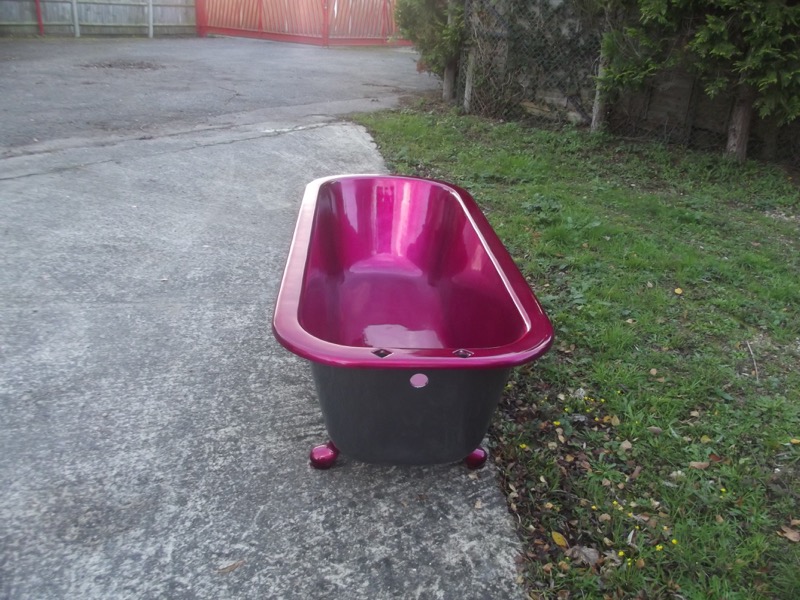
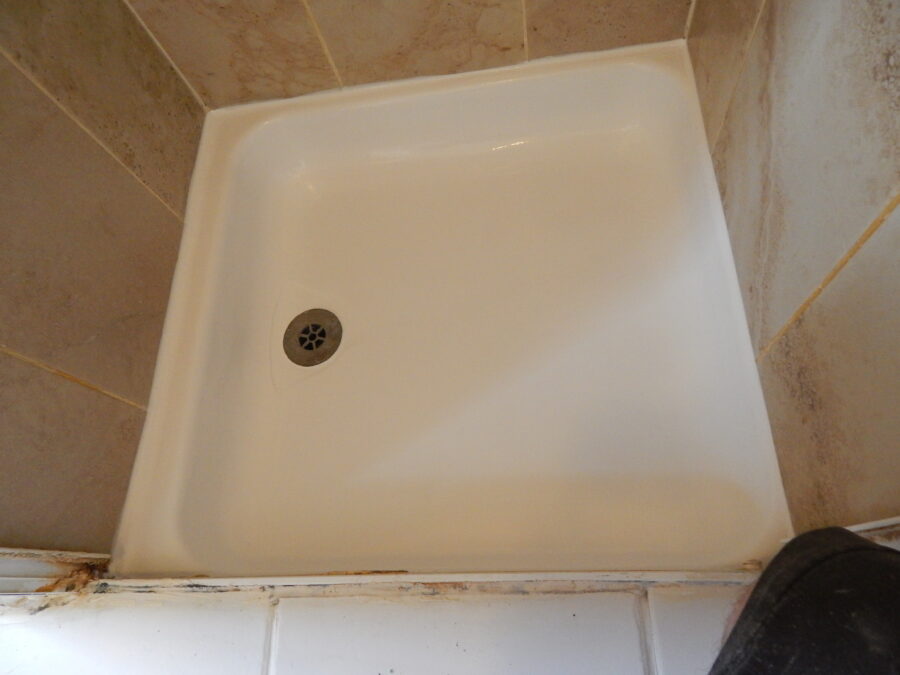
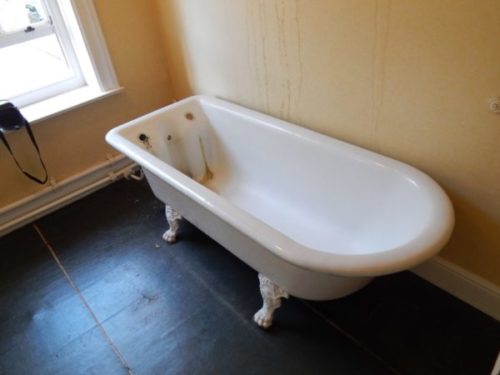
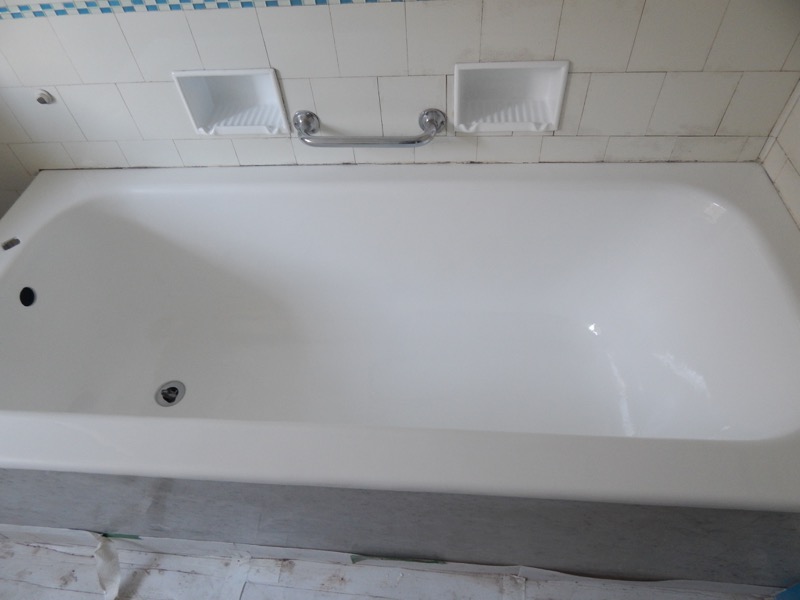
The pictures here are of some plain, white, acrylic baths which we have customised for a Interior Designer.
Each of them has had a different bespoke finish applied making each a unique bath.


The back story here is that a Designer needed 4 baths for a project she was working on in the Notting Hill area of central London. We have done work for this lady before. She seems to gravitate toward the unusual and colourful, which means each project we work on for her tends to be very different, to say the least.

Two of the baths had to be received at the workshop, finishes applied inside and out and the baths delivered to Notting Hill on the morning of the fifth day as her deadline was very tight.These baths would need to be fitted on that the 5th day.

The Designer gave us an idea of what she was after in terms of the look she wanted and we showed her some of the finishes that might suit her purpose.

She picked 4 different interior finishes she wanted and specified the exteriors for the 2 rush baths. She still needed to work out what finishes would be best for the remaining 2 baths so we would have to just hang fire there until this is decided.

All of this was done by phone, email and internet which keeps everything very convenient (we had done a bespoke bath for a project in the south of France for the same designer and again everything was done over internet and phones. Being able to work in this way saves a lot of time and expense and simplifies getting the job done for our clients.)This service can be provided to designers where ever they are in the country-or even the World!We do more work for Interior Designers in London but we can provide this service if you are in Edinburgh, Glasgow or New-York!

The baths were delivered on the Monday morning to our workshop and we got cracking.
The two rush baths were finished on Friday morning and the courier turned up at 9:30am to collect them and they were delivered to the project in London before lunch. We should get some pictures of the baths in their final locations and if it’s fine with the client we’ll post them here.

The client LOVED them and asked us to do the other two as soon as possible. The outside was still to be a gloss black but the interior was again done in a very interesting finish.

We really enjoyed doing these baths because they are fun and different. I especially like the fact they are as subtle and retiring as a train crash.

We hope this is a service which other Designers would be interested in and so we have been trying to think of a name for it that would, in itself, tell people (or at least give them an idea of) what it is we are doing. I also wanted to call the customised baths something which communicated the reaction people have when first seeing such a bath. So far this has involved the use of expletives: “* me! Is that a *! bath!!” And so on. Haven’t shown loads of people yet, but of the few so far this has seemed to be the most common reaction.

So I was going for something a bit earthy or fruity. However, the office staff, who despite being the salt of the earth etc, etc, blah blah blah, seem to have the collective sense of fun and irreverence usually associated with a funeral. And as a result any of my suggestions of a risque nature were shot down in flames as being “inappropriate and not in keeping with the clientele we service”. There was a lot of discomfort and much twisting of pearl necklaces at some of the suggestions I had.

Eventually, in an attempt to appease, I suggested we call it the: “White To Fluorescent Bath service” which seemed to be acceptable to the office despite the fact it is really more a description than a name, and it’s not even an accurate description because we don’t make the baths fluorescent. But it does gives an idea of what we are doing and the good ladies seemed happy with it and felt it was something they could say to customers without blushing. One of them said it seemed a bit of a mouthful so I suggested they just abbreviate it and, again, that seemed satisfactory to all concerned.

If you are putting together a bathroom for a client (or even for yourself) and need a custom bath for your design plans then please get in touch on 01342 841 533 and lets see what we could do for you.

Just tell the lady on the end of the phone that you are interested in the WTF Bath Service and they will be more than happy to discuss matters.

John. Head Technician

Note from the good ladies in the office.

John is not quite as funny as he thinks he is and we are not quite as silly either. WTF.Hmmm.

George Jennings Brought Back From The Dead

2
Jennings Motif After

This is a rare tilting sink by George Jennings. We do not have an exact date but these sinks were quite early (circa 1860) and were one of the designs one comes across before the waste and overflow became pretty much the norm for basin design.

Here is the basin in situ prior to restoration work.


George Jennings himself was one of the giants of Victorian Sanitation. It was his toilets which were introduced at the Great Exhibition of 1851 in the Crystal Palace in London. This was the first time many people had the chance to use a flushing toilet and many, many people went ahead and did so. Over 800,000 people paid over a penny each to gain access to this new and exciting experience. It seems strange to us now but the impact the toilets at this exhibition made was massive. The phrase “to spend a penny” meaning “to use the loo” stems from George Jenning’s toilets. And within 4 years of the exhibition there were over 200,000 flushing toilets in London alone. Now the very idea of not having a flushing toilet in your home is completely foreign and unacceptable.

The tilting sink was a design the allowed the sink to swivel round on two pivots to be emptied. There was no plug hole.

It looks like the tilting sink was introduced after 1851 but before the turn of the century, as it seems to appear after the Great Exhibition of 1851 but was still referred to as “Jennings’ patent tilt-up and lipped lavatory”. What we now call the “wash basin” was called the “lavatory” until the turn of the century! A bit confusing sometimes. When discussing antiques we do sometimes forget and call the item a lavatory instead of a sink.

The basin itself was in a pretty sorry state and had many cracks and repairs on it. It appears as though the basin had had different repairs done to it on at least 3 separate occasions. Some of the repairs were held together with glue, some with a white hard paste and one particular area with staples. Staples or riveting was a common way to repair ceramics from the 18 century up until approx. 1910. We think this basin may first have been repaired circa 1885.

Here are some pictures showing the basin prior to restoration and with the poor repairs.


Some of the repaired pieces of porcelain were sitting proud of the rest of the sink, especially around the edge.

The first thing that was done was to break the bowl back down into its pieces and clean off the glue, etc that had been used in the previous repairs.

Then the bowl put back together with the parts fitting as tightly together as we could get. Sometimes this required grinding small areas away to allow the pieces to slip together. Once the basin was all back together there were still some areas sitting a little high.

To handle the high areas the basin was treated with high build primers and fillers to smooth out these areas.
Then the basin colour was matched and the basin sprayed.

The brass pivots need to be re-attached, but this is going to be left until the basin gets back to its home and the positioning of the pivots can be checked to ensure they are fixed in exactly the right place.
Then the pivots will be fitted in place using a putty mixture which is what was used originally for this type of work.

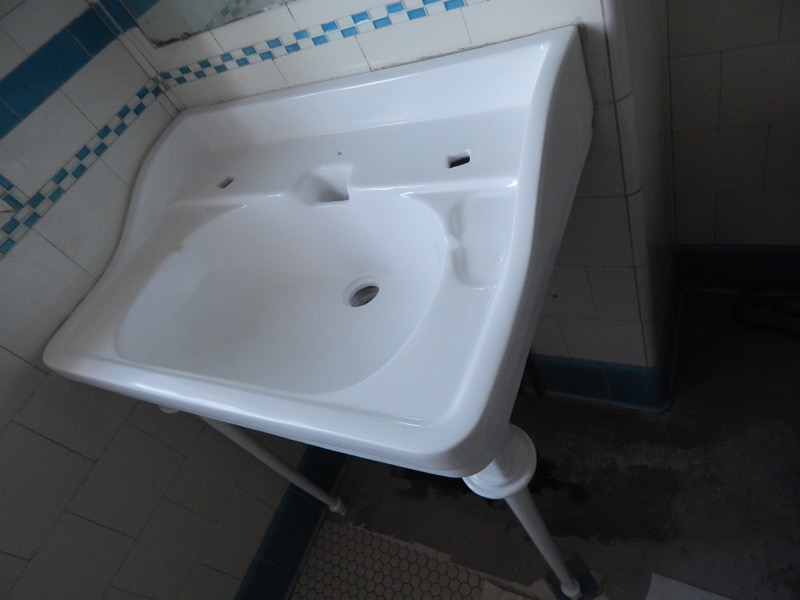
Here are some pictures of the basin after restoration. Hopefully we will get some pictures from the client with the basin in situ again and ready to be used again for another hundred or so years!


Acrylic Bath Chip Repair

0
AcrylicBathDamage-578x433

Acrylic bath chip repair. A repair using acrylic coating.

We were called to repair this damaged area on an acrylic bath (these are often referred to as “plastic baths”).
The client’s radiator had fallen off the wall and damaged the top edge of the bath.

Unfortunately the damaged area was below a skylight and on the side of the bath closest to the door, so it was highly visible and a repair would have to be exceptionally good for it not to catch the eye or be felt as one got in and out the bath.
There is a technique we have been using on spa baths where the final step has been to apply an acrylic coating over the repaired area. The coating is mechanically blended into the existing acrylic shell of spa bath with the result that the repair cannot be felt or seen.

Here you can see the damaged bath

This is not something we normally do when doing repairs on baths as it doubles the time taken to carry out the repair to around 4 hours, and in many situations the extra cost incurred is not warranted.

But for this bathroom, where the rest of the room was in pristine condition and where the damage was in a very visible spot, we thought it would be worth applying the acrylic coat and blending it to the bath.
The video of the repair is very jerky I’m afraid, but it does give an idea of the finished work.
This technique is only suitable for Acrylic and Fibreglass baths which have a gel coat. It would not work on cast iron or pressed steel baths.

If you would like to see how the repair looked at the end have a look at our video entitled “Acrylic Bath Repair”.

French Jacob Delafon meets Melbourne Australia

2
bath2-578x770

Here is a fantastic double ended Jacob Delafon bath that we couriered to Melbourne, Australia. The feet are really exquisite. Every Delafon bath has the model number cast into it’s feet. This particular model is number 38. Here is the bath in it’s raw state.

As the bath is French and not typical in height or depth we had bespoke standpipes made in Silver Nickel so that the clients could deck mount a lovely set of antique bath-shower mixer taps. The mixer taps were also in Silver Nickel. All this was packaged up and sent to Melbourne.

The client had the interior re enamelled in a soft blue/white and simply brushed down the outside, whilst the feet were electro copper plated.


They have done a fantastic job with the whole room. We think it’s a beauty! What do you think?

Top Art Wash Basins

0
Top Art Basin

The Top Art™ Collection includes 4 exotic basins & countertops. This colorful range emanates both positive energy and playfulness into its surroundings. Vivid, contrasting colors and oversized patterns and mini-prints in are pieced together, taking inspiration from some of the most hip fashion trends and designer prints of today. These basin will certainly add some exotic style to your home.

These basins can be mounted on a console table or mounted onto an existing surface. As the basin and countertop are sold separately a bespoke and completely original look can be achieved.

Top Art™ Collection can be matched with some fantastic wall mounted basin taps to complete the look

Another benefit of the Top Art™ range is the fact that the basin and countertop are sold as separate items. This enables a bespoke bathroom combination to be created. For example the Zanzibar basin looks amazing with the complimenting countertop, but equally beautiful with the Congo countertop. Alternatively the basin can be mounted onto an already existing surface. The variations possible make for a truly unique bathroom setting.

If installing on a new base we recommend a wrought iron console table with glass shelf. W627 x H864 x D479mm

These basins are certainly well named. Which is your favourite?


© Copyright The Bath Business - Theme by Pexeto   |     Site Map - Bath Restoration - Bathroom Accessories - Luxury Bathrooms